
Ein Forscherteam von Apple hat mit HALO ein vielversprechendes System für autonome Humanoide enthüllt.
In einem auf arXiv veröffentlichten Paper demonstrieren die Wissenschaftler, wie ein solcher Roboter vom Typ Unitree G1 mithilfe eines im Rucksack mitgeführten Mac mini mit M4 Pro Chip (64 GB RAM) ihm fremde Räume analysiert und navigiert.
Roboter hört korrekt auf Sprachbefehle
Durch ein rein synthetisch in Nvidia Isaac Sim generierte Training meisterte der Roboter in Tests ohne menschliche Fernsteuerung oder vorheriges Scanning 91 Prozent von 360 Sprachbefehlen – darunter das selbstständige Aufspüren von Stühlen zum Hinsetzen oder das Ducken unter Tischen.
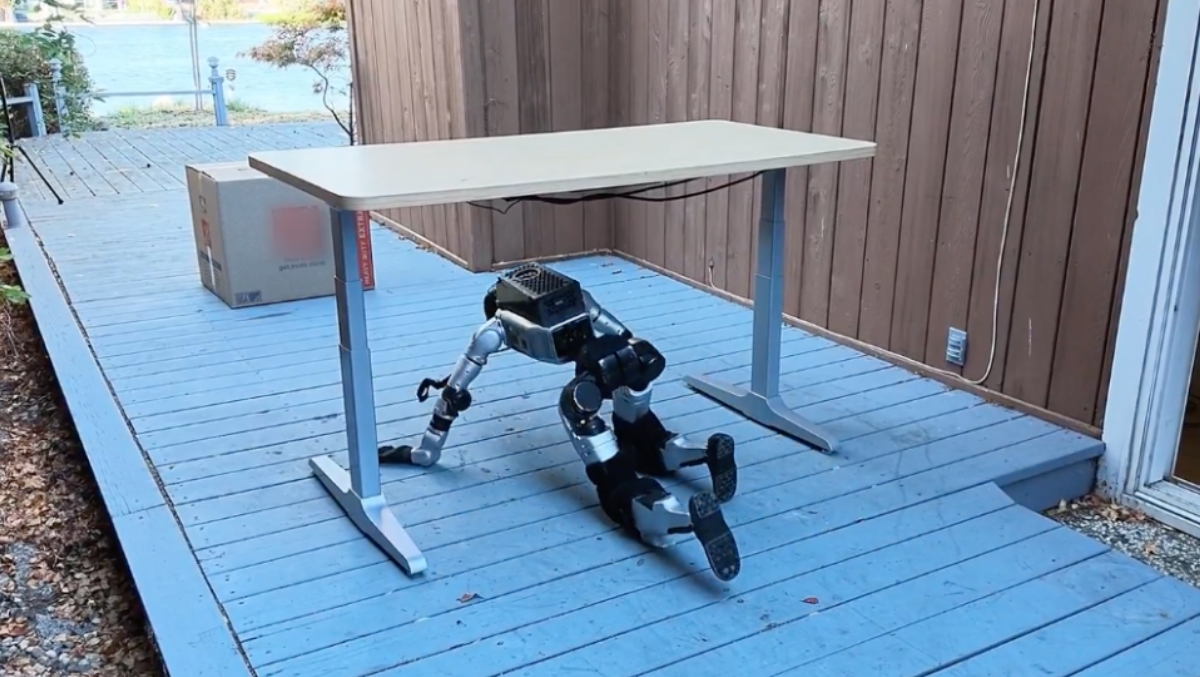
Das Steuerungssystem teilt sich die Aufgaben auf: Der Mac übernimmt über ein Vision-Language-Modell die Aufbereitung von Sprachbefehlen und plant alle Paar Sekunden die Bewegungsabläufe, während ein Jetson-Prozessor auf dem Roboter die Feinmotorik der 29 Gelenke in Echtzeit (50 Hz) ansteuert.
Apple zeigt Ambitionen im Bereich Robotik
Obwohl komplexe Aufgabenketten die Erfolgsquote noch senken und Manipulationsobjekte noch unberücksichtigt bleiben, machte Apple den vollständigen Code auf GitHub verfügbar. Ein kommerzielles Produkt steht zwar nicht bevor, doch die Studie unterstreicht Apples Ambitionen bei der lokalen KI-Verarbeitung in der Robotik.
Apple is building humanoid robot brains.
Apple researchers have published HALO, a system that lets a Unitree G1 humanoid move around rooms it has never seen before. Tell it to “go sit on the chair” and it finds the chair, walks over and sits down. It can also crouch or crawl under tables, step through half-open doors and push boxes.
The robot carries an Apple Mac mini with an M4 Pro chip on its back. That computer runs the models that decide what to do and plan each movement. Nothing runs in the cloud, and nobody steers the robot remotely.
Most of the training data came from simulation: about 300 hours of humanlike movement, placed in 1,000 computer-generated living rooms, offices and bedrooms. Nobody teleoperated the robot to collect it.
The robot succeeded in 91% of 360 real-world trials across six skills.
All eight authors work at Apple, and the code is on GitHub.
— Humanoids daily (@humanoidsdaily) November 5, 2026




Hinweis: Artikel enthält Affiliate-Links. Was ist das? Foto: Apple/X